VR safety training with scored competency assessment and a dated digital certificate, deployable on standalone headsets across every site, in Hindi and English.
The main conveyor hazards are nip and pinch points where the belt meets pulleys, rollers and the load, which can draw in a hand, clothing or a whole limb in an instant, along with entanglement in moving parts, being struck by material, and injuries during blockage clearance and maintenance. The controls are fixed guarding over nip points, safe proximity distances, accessible emergency-stop pull-cords, and strict lockout/tagout before any hands go near the belt. IS 11592 and CEMA govern conveyor safety design and practice. EDIIIE’s Safe Conveyor Operations module trains workers to identify every nip point, keep safe distances, locate and use the e-stop, and, above all, isolate and lock out the conveyor before clearing a blockage, the task that causes the most severe conveyor injuries. Every attempt is scored and certified.
This module is designed around IS 11592 / CEMA and delivered as an immersive VR simulation with three progressive modes, Learn, Practice and Assessment, with progression gated on competency. Every trainee finishes with a scored result and a dated digital certificate recorded in the LMS.
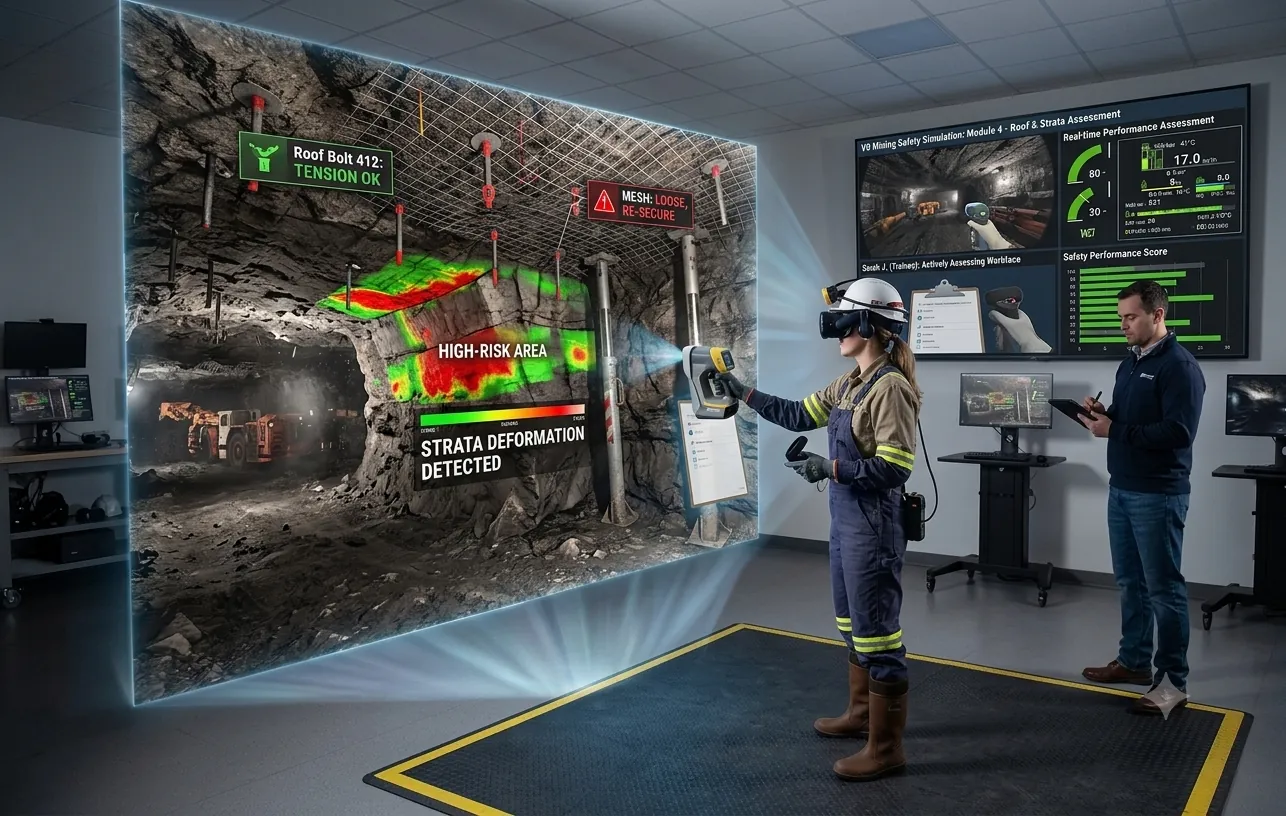
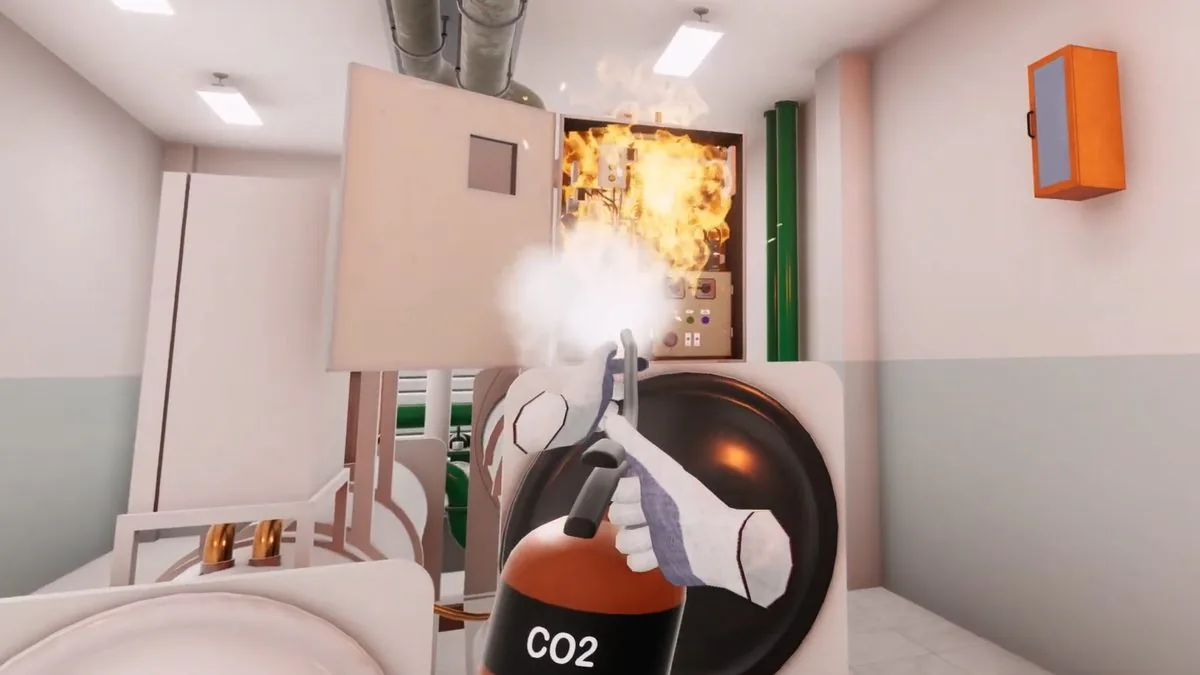
Screens from the Conveyor Safety module. Every scenario is rebuilt from real plant conditions so the hazard, the equipment and the procedure match what the worker meets on shift.


The classic conveyor fatality is a worker reaching in to clear a blockage or free a jam on a running belt, and being caught in a nip point. It happens because stopping and locking out the conveyor feels slower than a quick reach-in under production pressure. VR is the ideal place to break that reflex: the trainee faces a blocked belt, and the simulation rewards the correct sequence, stop, isolate, lock out, verify, then clear, while showing the consequence of the shortcut safely. Because the module links to Lockout/Tagout, the isolation step is trained as the same competency the worker already holds.
Guards get removed for maintenance and not always replaced; workers stop noticing a missing guard on a belt they pass every day. The module trains workers to actively recognise an unguarded nip point and to report it, rather than treating guarding as someone else’s responsibility. For bulk-handling operations in steel, power, mining and manufacturing, where conveyors run for kilometres, this recognition habit is a core part of the safety culture.
Naming the standard is what separates a vendor page from a blog post, for a buyer and for an answer engine alike. Each element of the module is mapped to the requirement it satisfies.
| Standard | What it requires |
|---|---|
| IS 11592 | Indian code of practice for selection and design of belt conveyors, including safety. |
| CEMA | Conveyor Equipment Manufacturers Association safety standards and labelling. |
| OSHA 1910.147 | Lockout/tagout of conveyors for maintenance and blockage clearance. |
One module, three gated modes, the trainee cannot reach assessment until they have demonstrated the procedure in practice.
A guided walkthrough of the procedure and the standard behind it, at the trainee's own pace, with the hazard shown safely at full realism.
The trainee performs the procedure themselves in an interactive scenario, repeating until the sequence is correct. Wrong choices show their consequence safely.
A scored assessment against the standard. On a pass, the LMS issues a dated digital certificate and logs completion, competency score and error-per-step for audit.
At SAIL Bhilai, one of India’s largest integrated steel plants, EDIIIE deployed a six-module VR safety programme to more than 5,000 workers, covering blast furnace, coke oven, rolling mill, fire response, electrical lockout and PPE. The programme standardised safety induction across shifts and sites without taking a single worker into a live hazard area to train.

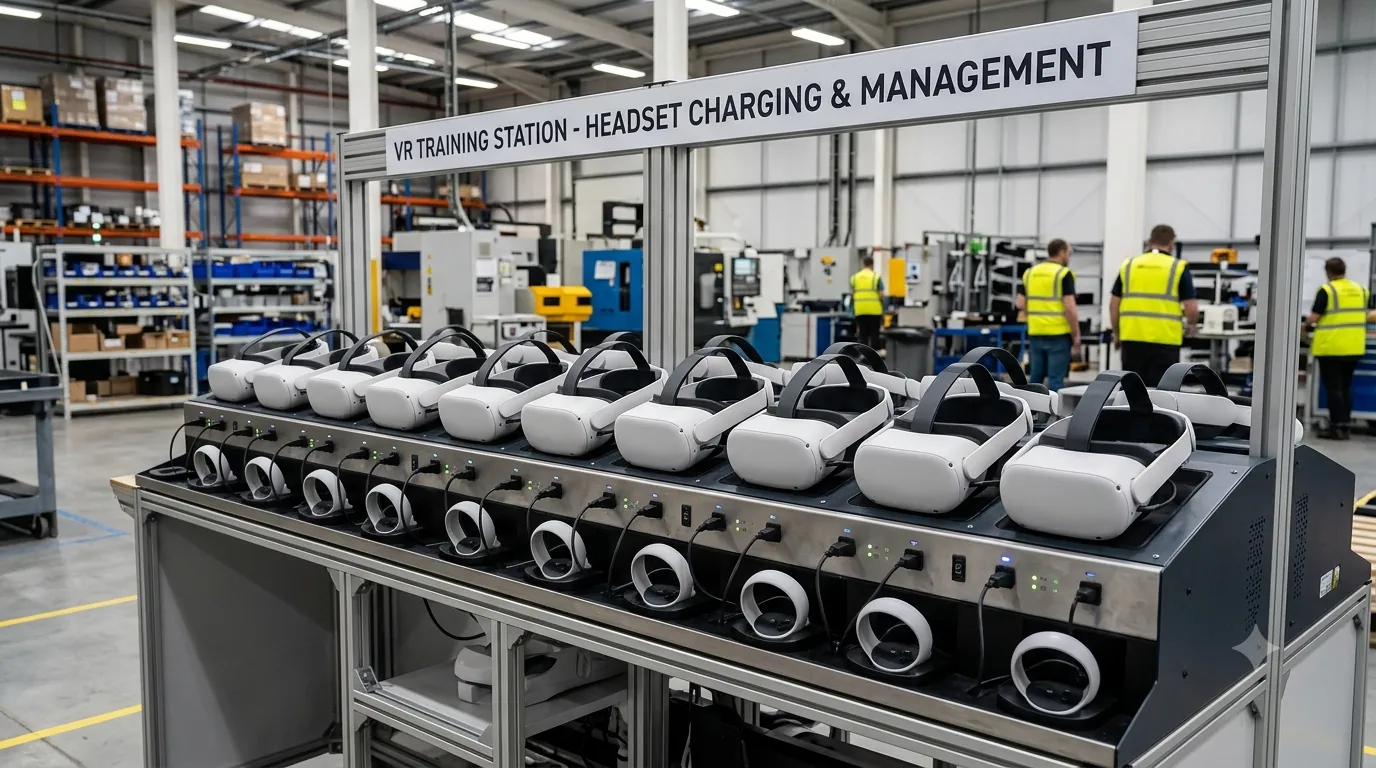
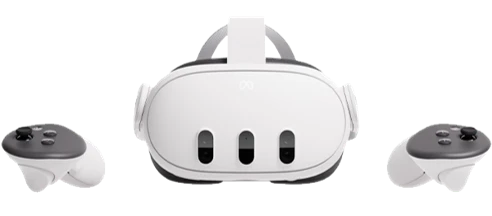
The same module ships to every site on a fleet of Meta Quest headsets with a charging station and a companion tablet for the instructor.

A rack of headsets lives at the plant. Trainees pick one up, complete the module and hand it back; scores sync to the LMS when the headset reaches Wi-Fi. No dedicated PC per seat and no simulator room to build.

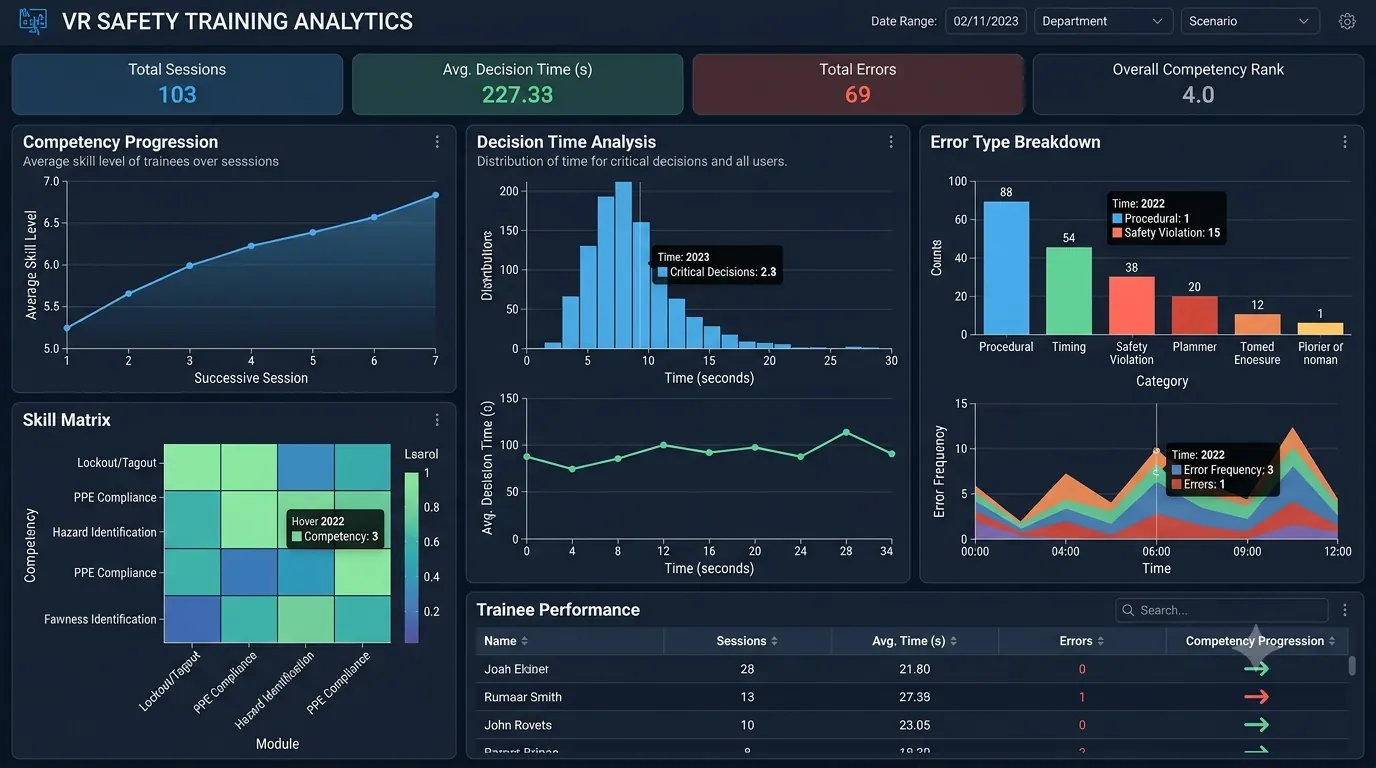
Assessment mode records decision time, procedural errors and safety violations per step. The safety officer sees competency progression per trainee and per department, and the LMS issues a dated digital certificate on a pass.

Every module is built and tested for standalone Quest hardware. Headsets and the charging station can be supplied with the programme, or the module is deployed onto a fleet you already own.
This module is deployed across EDIIIE's industry programmes. Explore how it fits each sector:
Book a demo and see the Conveyor Safety module running on a headset, scored against IS 11592 / CEMA.
Request this module