Book a Demo
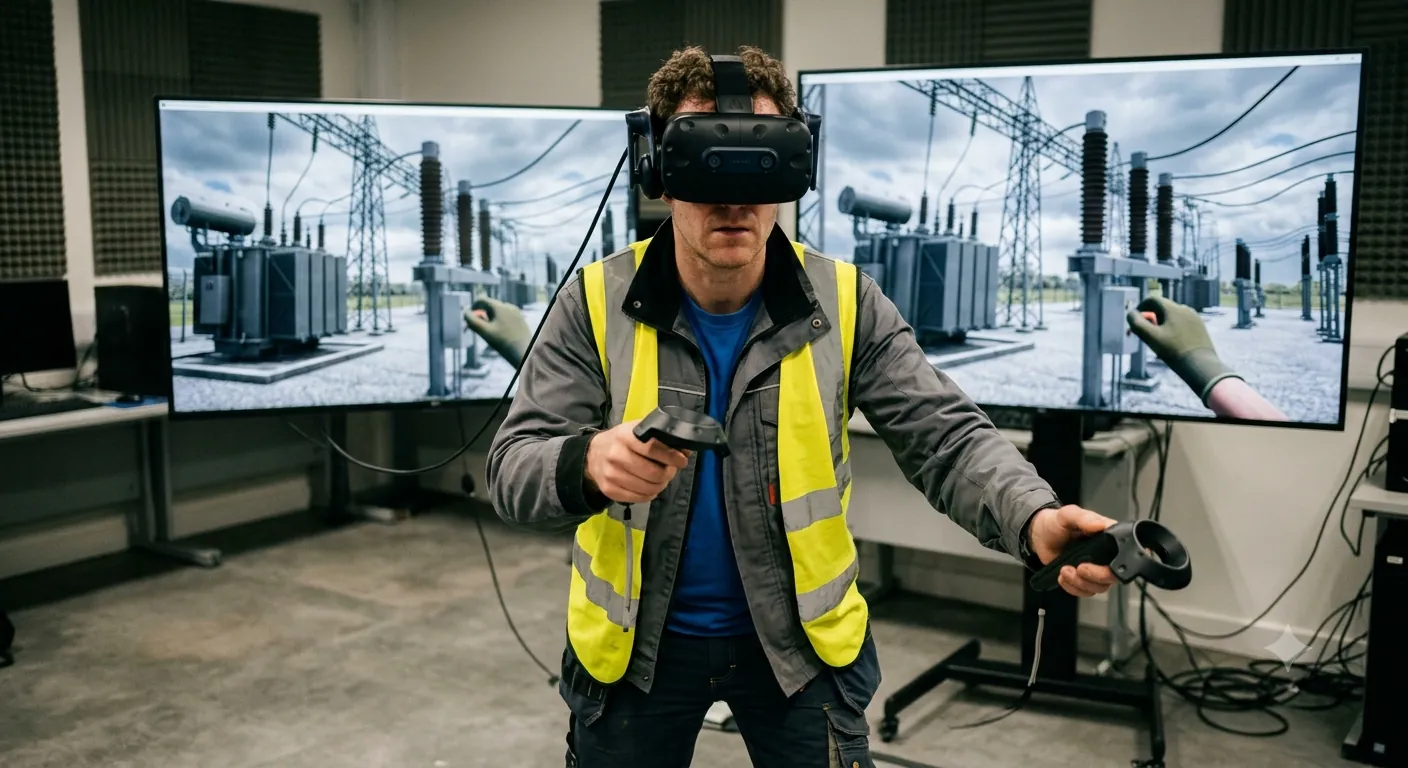
Trainee in a VR headset working in a simulated high-voltage substation
HomeSafety TrainingElectrical Safety
Electrical Safety & Arc Flash

Electrical Safety & Arc Flash VR Training
Aligned to NFPA 70E / IE Rules

VR safety training with scored competency assessment and a dated digital certificate, deployable on standalone headsets across every site, in Hindi and English.
NFPA 70E
Electrical safety standard trained
  • NFPA 70EStandard for Electrical Safety in the Workplace, arc-flash risk assessment, approach boundaries and electrical PPE.
  • IE Rules / CEA RegulationsIndian statutory rules for safe electrical work and safety clearances.
  • ISO 45001Documented safe system of work for electrical tasks.
What does NFPA 70E require for electrical safety?

NFPA 70E requires employers to assess arc-flash and shock risk, establish approach boundaries around energised equipment, and ensure workers use the correct arc-rated PPE and safe work practices, with the first principle being to establish an electrically safe work condition (de-energise and lock out) wherever possible rather than work live. Where live work is unavoidable, it must be justified and controlled. EDIIIE’s Electrical Safety module trains this hierarchy in VR: the trainee identifies the arc-flash boundary, selects arc-rated PPE to match the incident energy, performs safe switching and isolation, and practises the first-aid response to electric shock and arc-flash burns. Arc-flash, an explosive release of energy that classroom training can only describe, is shown safely at full intensity in simulation. Every attempt is scored against NFPA 70E and issues a dated certificate, and the module links directly to Lockout/Tagout for the isolation sequence.

What the module covers

Built to the standard, scored on the behaviour

This module is designed around NFPA 70E / IE Rules and delivered as an immersive VR simulation with three progressive modes, Learn, Practice and Assessment, with progression gated on competency. Every trainee finishes with a scored result and a dated digital certificate recorded in the LMS.

Inside the module

What the trainee sees

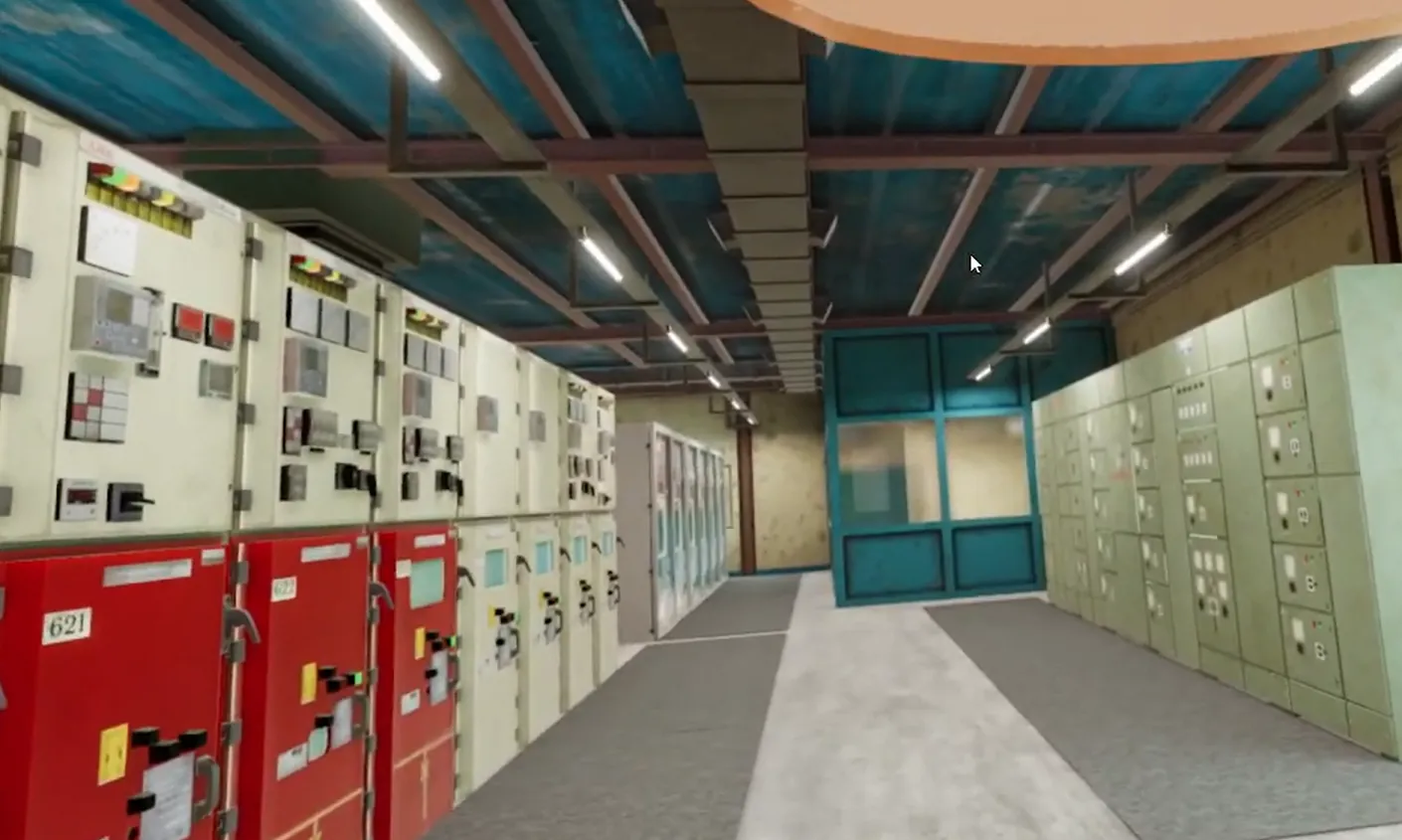
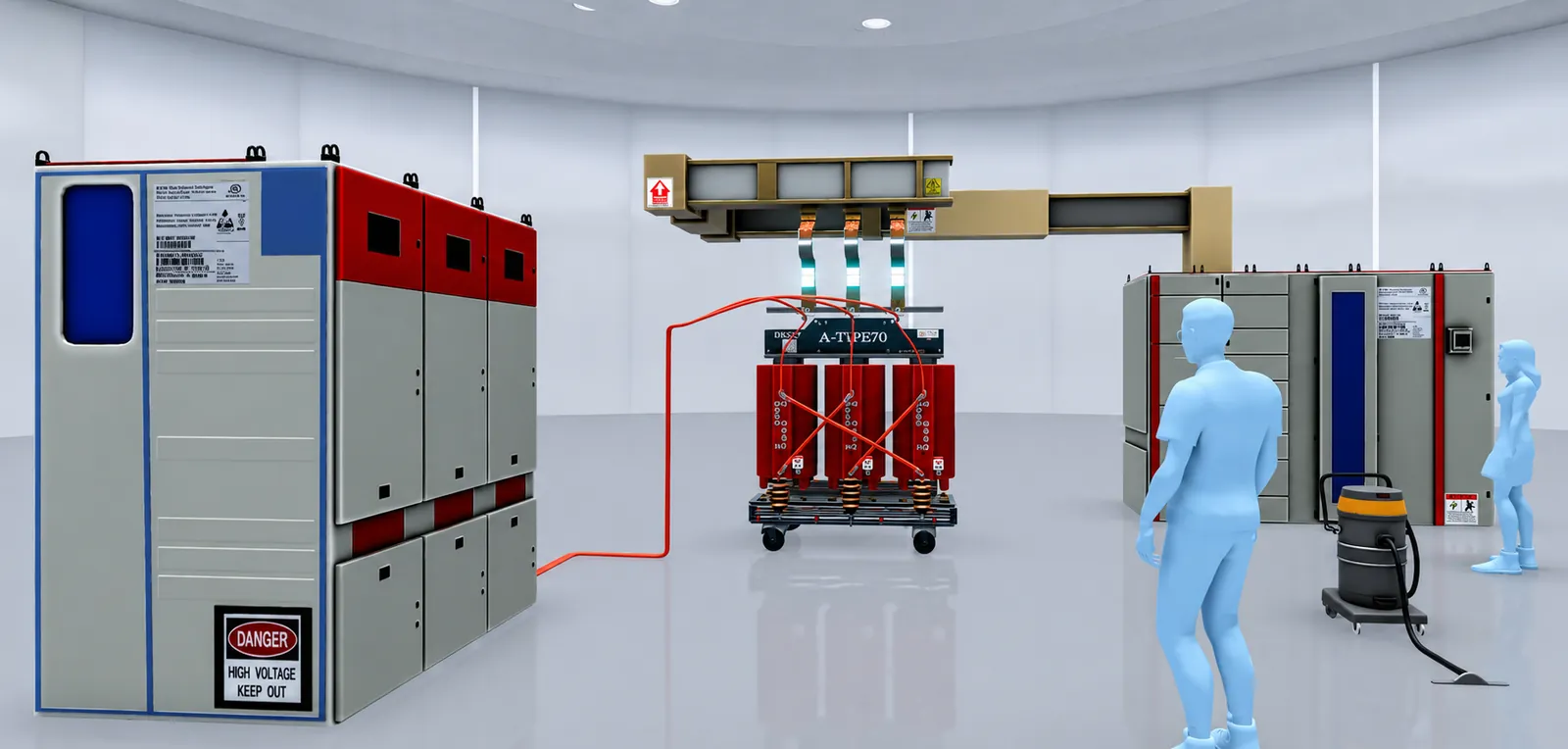
Screens from the Electrical Safety module. Every scenario is rebuilt from real plant conditions so the hazard, the equipment and the procedure match what the worker meets on shift.

Trainee in a VR headset working in a simulated high-voltage substation
High-voltage substation walkdown
VR view of an indoor switchgear room used for safe-switching practice
Switchgear room safe switching
Dry-type transformer and switchgear layout in the electrical safety VR module
Transformer isolation and PPE

Showing arc flash without the arc flash

An arc-flash event releases heat, pressure and light in a fraction of a second and can be fatal to anyone within the boundary. There is no safe way to demonstrate one live, so most electrical-safety training describes it in words and hopes the message lands. VR shows it: the trainee experiences the consequence of an incorrect switching operation at full intensity, safely, and immediately understands why the approach boundary and arc-rated PPE exist. That single visceral moment does more for behaviour than a chapter of text, and the assessment then checks that the trainee applies the boundary and PPE rules correctly.

De-energise first, the culture the module builds

The most important electrical-safety behaviour is not doing live work more carefully; it is not doing live work at all unless it is genuinely unavoidable. EDIIIE’s module reinforces the NFPA 70E hierarchy by making de-energisation and lockout the default path, it connects directly to the Lockout/Tagout module so a worker learns electrical isolation as one continuous competency rather than two disconnected courses. This maps to real deployments in power, energy and steel, where switchyard and substation work is routine and heavily audited.

Compliance mapping

The standards this module maps to

Naming the standard is what separates a vendor page from a blog post, for a buyer and for an answer engine alike. Each element of the module is mapped to the requirement it satisfies.

StandardWhat it requires
NFPA 70EStandard for Electrical Safety in the Workplace, arc-flash risk assessment, approach boundaries and electrical PPE.
IE Rules / CEA RegulationsIndian statutory rules for safe electrical work and safety clearances.
ISO 45001Documented safe system of work for electrical tasks.
How it is delivered

Learn, Practise, Prove

One module, three gated modes, the trainee cannot reach assessment until they have demonstrated the procedure in practice.

Learn

A guided walkthrough of the procedure and the standard behind it, at the trainee's own pace, with the hazard shown safely at full realism.

Practise

The trainee performs the procedure themselves in an interactive scenario, repeating until the sequence is correct. Wrong choices show their consequence safely.

Assess & Certify

A scored assessment against the standard. On a pass, the LMS issues a dated digital certificate and logs completion, competency score and error-per-step for audit.

Proof

Deployed on real industrial sites

Client deployment
5,000+ workers trained across 6 safety modules

At SAIL Bhilai, one of India’s largest integrated steel plants, EDIIIE deployed a six-module VR safety programme to more than 5,000 workers, covering blast furnace, coke oven, rolling mill, fire response, electrical lockout and PPE. The programme standardised safety induction across shifts and sites without taking a single worker into a live hazard area to train.

Client: SAIL Bhilai Steel Plant
Read the case study
Trainee in a VR headset working in a simulated high-voltage substation
In-headset view, High-voltage substation walkdown
Rollout

Runs on standalone headsets, no PC, no lab

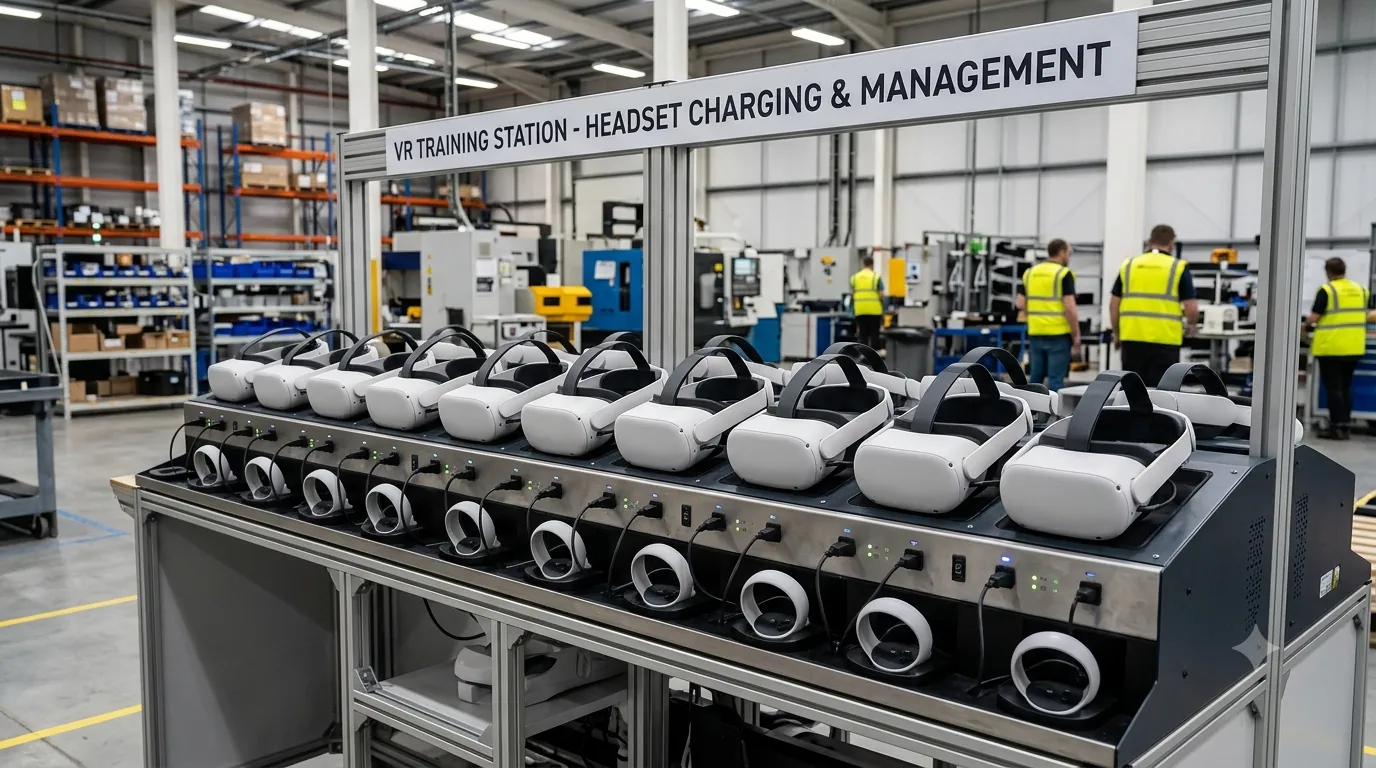
The same module ships to every site on a fleet of Meta Quest headsets with a charging station and a companion tablet for the instructor.

A VR training station with a rack of Meta Quest headsets charging on a factory floor
On-site fleet

Charge, hand out, train, in the induction room itself

A rack of headsets lives at the plant. Trainees pick one up, complete the module and hand it back; scores sync to the LMS when the headset reaches Wi-Fi. No dedicated PC per seat and no simulator room to build.

  • Standalone Meta Quest headsets, offline-capable
  • Instructor tablet mirrors the trainee's view live
  • Narration in Hindi, English and regional languages
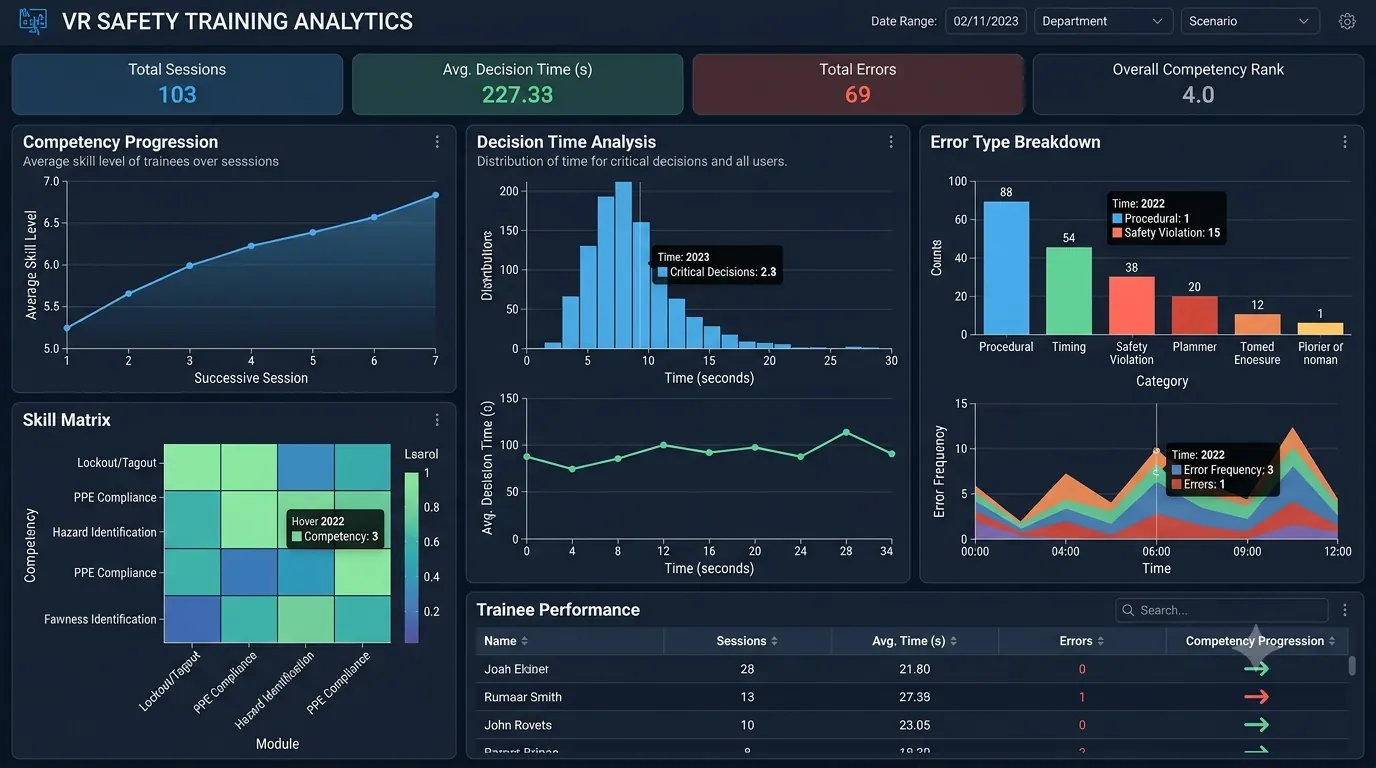
VR safety training analytics dashboard showing competency progression, decision time and error breakdown per trainee
Assessment

Every step scored, every error logged

Assessment mode records decision time, procedural errors and safety violations per step. The safety officer sees competency progression per trainee and per department, and the LMS issues a dated digital certificate on a pass.

  • Competency score, errors-per-step and time-on-task per trainee
  • Exports to your existing LMS via SCORM/xAPI or CSV
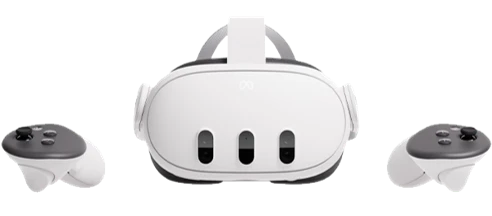
Meta Quest 3 standalone VR headset with controllers
Meta Quest 3, the standard headset for EDIIIE safety modules

Every module is built and tested for standalone Quest hardware. Headsets and the charging station can be supplied with the programme, or the module is deployed onto a fleet you already own.

Where it is deployed

Sectors that run the Electrical Safety module

This module is deployed across EDIIIE's industry programmes. Explore how it fits each sector:

Related modules

Often deployed together

See all 11 safety modules

FAQ

Electrical Safety training, common questions

Both. The module is built around the NFPA 70E hierarchy, which is the international reference for electrical safety, and maps to the Indian Electricity Rules and CEA safety regulations for sites operating under Indian jurisdiction. The applicable standard is named in the assessment and on the certificate.
Yes. Trainees learn to read the arc-flash risk, determine the incident energy level, and select arc-rated PPE to match. The simulation lets them see the consequence of under-rated PPE safely, which is not possible in any live demonstration.
Electrical isolation is the first step of most electrical work, and it is a lockout/tagout procedure. EDIIIE builds the two modules to link, so a worker is certified for the whole sequence, establish a safe work condition, lock it out, verify zero energy, then work, rather than for two separate topics.
NFPA 70E requires retraining at least every three years, and sooner when duties change, when audits find non-compliance, or when new equipment or procedures are introduced. Indian Electricity Rules and CEA Regulations expect authorised persons to be competent and periodically re-assessed; the VR assessment record supports both.
An arc flash is the explosive release of energy when current jumps through air between conductors, reaching temperatures that cause severe burns at several metres. The module lets a trainee experience an arc-flash event safely, then trains approach boundaries, PPE category selection and the de-energise-first rule that prevents it.
A qualified person has the skills and knowledge of the equipment involved and has been trained to recognise and avoid the electrical hazards present. The module provides the hazard-recognition and procedure training; the employer then combines it with equipment-specific competence to authorise the person.

Certify your workforce on Electrical Safety, without the live-environment risk

Book a demo and see the Electrical Safety module running on a headset, scored against NFPA 70E / IE Rules.

Request this module